

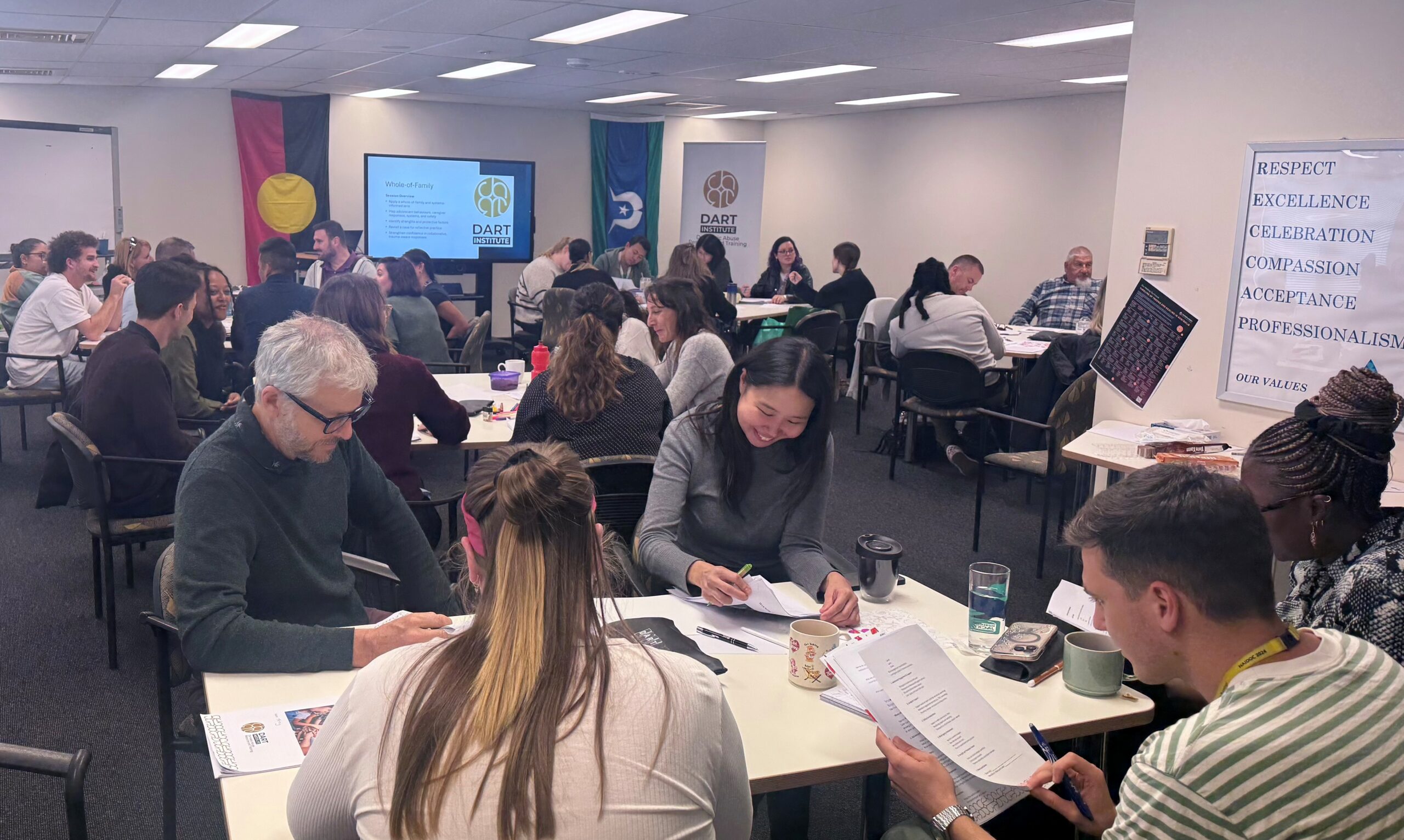
This course equips practitioners with advanced skills and specialised knowledge to engage safely and effectively with individuals who use violent or abusive behaviours. Participants will develop capabilities in establishing change-promoting relationships, enhancing accountability, and maintaining clear professional boundaries while prioritising the safety and wellbeing of victim-survivors and children.
Grounded in evidence-based and trauma-informed practice, the training strengthens practitioners’ confidence in risk assessment, de-escalation, and behaviour-change engagement
within complex domestic and family violence contexts. It is designed for professionals working directly or indirectly with people who use harm, and who play a role in coordinated, systemic responses to FDV.
Outcomes:
- Critically analyse case information to understand the broader patterns, context, and drivers of a client’s abusive behaviour within domestic and family violence framework.
- Apply advanced questioning and active listening techniques to assess readiness, ambivalence, and opportunities for behaviour change while maintaining a stance of accountability.
- Collaboratively develop, implement, and review change-promoting plans that balance client responsibility with dynamic risk, safety considerations, and system coordination.
- Maintain professional, boundaried relationships that foster engagement and promote change, while upholding the safety and wellbeing of victim-survivors, children, and practitioners.
- Integrate relevant legislation, ethical obligations, and duty-of-care requirements into all aspects of practice, ensuring compliance, accountability, and safe decisionmaking.